
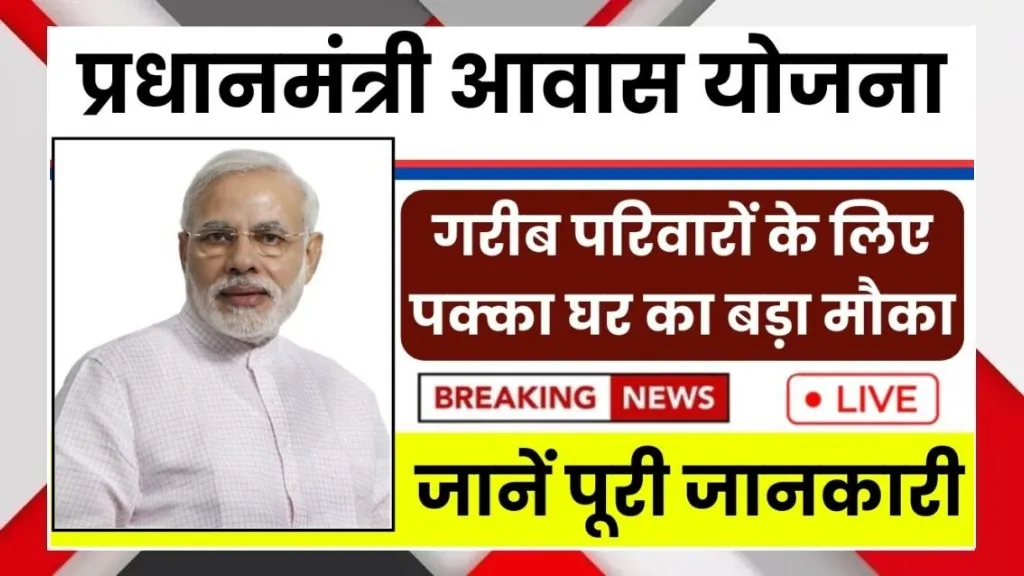
The Pradhan Mantri Awas Yojana 2026 continues to be a life-changing scheme for millions of poor and homeless families in India. Under this government initiative, eligible rural beneficiaries receive financial assistance of ₹1,20,000 to build a permanent and safe house. The main aim of PM Awas Yojana is to ensure “Housing for All” by providing basic shelter with dignity, security, and better living conditions. The assistance amount is directly transferred to the beneficiary’s bank account in installments, ensuring transparency. In 2026, the scheme focuses more on needy families, women ownership, and timely completion of houses, making it one of the most impactful welfare programs.
Financial Assistance of ₹1,20,000 Under PMAY 2026
Under PM Awas Yojana Gramin (PMAY-G), eligible rural families are provided ₹1,20,000 as financial support to construct a pucca house. This amount is given in multiple installments linked to different stages of house construction, such as foundation, wall level, and roof completion. The money is transferred directly to the beneficiary’s bank account through Direct Benefit Transfer (DBT), reducing corruption and delays. In hilly or difficult areas, the assistance amount may be higher. This support helps poor families who cannot afford a permanent house on their own and ensures better quality housing in villages.
Eligibility Criteria for PM Awas Yojana 2026
To get the benefit of ₹1,20,000, applicants must meet specific eligibility conditions. The beneficiary should not own a pucca house anywhere in India. Selection is mainly based on SECC data and verification by local authorities. Priority is given to economically weaker sections, scheduled castes, scheduled tribes, widows, disabled persons, and landless laborers. In many cases, the house is registered in the name of a woman or jointly with a male member, promoting women empowerment. Meeting eligibility criteria is essential for approval under the 2026 list.
Application Process for PM Awas Yojana 2026
The application process for PM Awas Yojana is simple but mostly handled through local governance bodies. In rural areas, applications are facilitated by the Gram Panchayat or housing officials. Applicants need to provide basic documents such as Aadhaar card, bank account details, job card under MGNREGA, and income-related information. After verification, the name is added to the beneficiary list. Applicants can also check their name and payment status online using official portals, making the process more transparent and accessible.
Installments and Construction Monitoring
The ₹1,20,000 assistance is not given at once. It is released in stages based on construction progress. Government officials monitor the construction through physical inspections and geo-tagged photographs. This ensures that the funds are used only for house construction and that quality standards are maintained. Beneficiaries are encouraged to complete construction within the given timeline to receive all installments without delay. This system improves accountability and speeds up housing completion.
Benefits and Impact of PM Awas Yojana 2026
PM Awas Yojana 2026 has significantly improved the living standards of rural families. A permanent house provides safety, protection from weather, better health conditions, and social dignity. The scheme also creates local employment opportunities through construction work. By focusing on poor and vulnerable families, the government is reducing homelessness and strengthening rural infrastructure. The ₹1,20,000 assistance plays a crucial role in turning the dream of owning a house into reality for millions across India.